Start with the bed you have
A drought-tolerant flower bed begins with observation, not a plant list. Watch how many hours of direct sun the space receives and where water collects or runs off after rain. Notice whether nearby trees compete for moisture and whether a wall or pavement reflects heat onto the bed. A plant described as drought-tolerant may still struggle if its need for sun or drainage does not match the site.
Check the soil before changing it. If water sits in a planting hole for a long time, plants that prefer sharply drained ground may be a poor fit. If the soil dries quickly, adding compost can help it hold some moisture while supporting root growth. Work compost into the planting area rather than filling individual holes with a very different soil mix. The goal is a bed where roots can move outward, not stay confined to pockets of improved soil.
Plan for the size plants will reach, leaving room for air circulation and for volunteers to reach weeds without stepping on crowns. In a shared garden, a simple sketch with plant names and expected heights can prevent taller flowers from hiding smaller ones.
Build color in layers
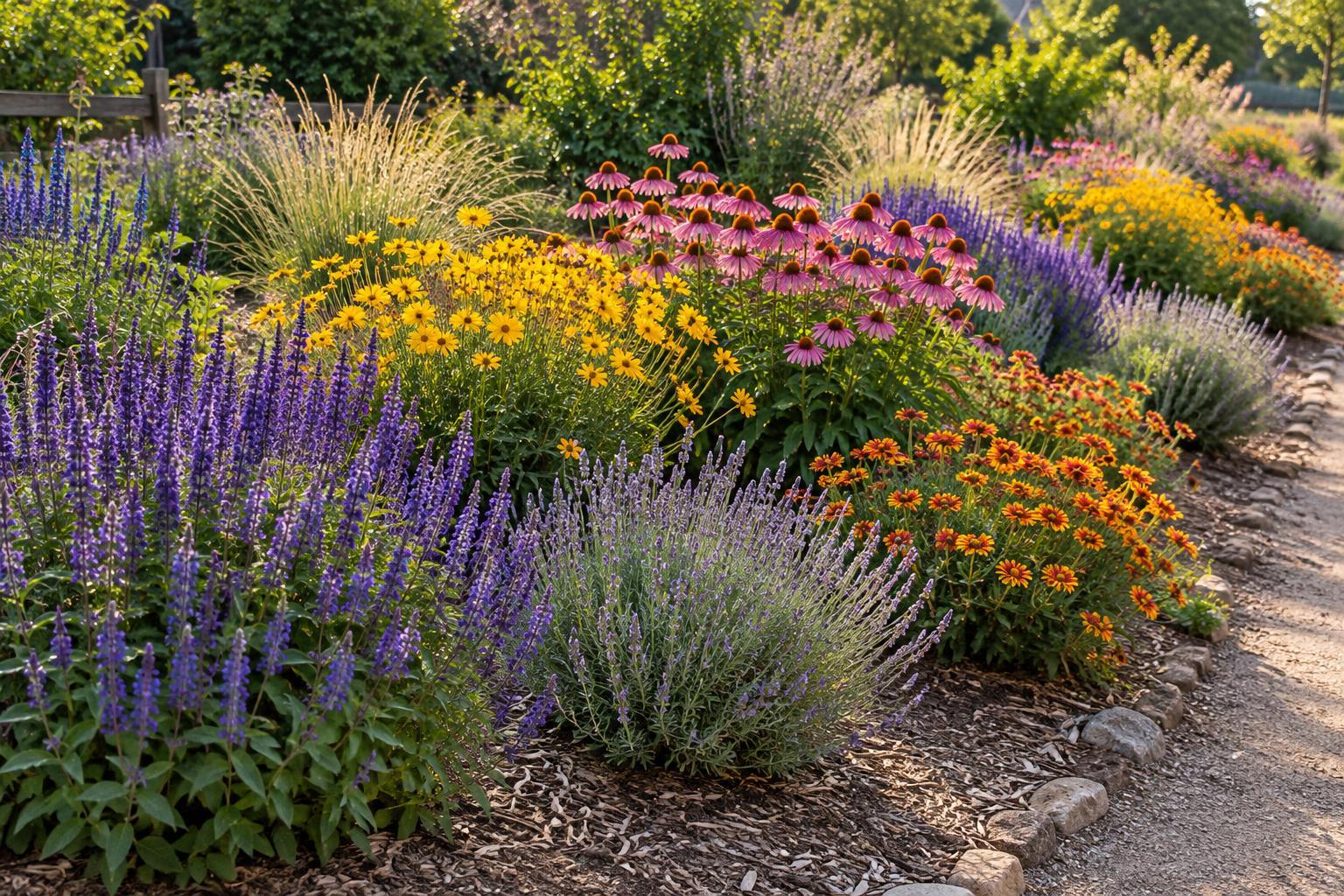
Long-lasting color comes from a sequence of plants, not necessarily from one flower that blooms all season. Choose a few dependable plants for the main structure, then add smaller groups with overlapping bloom periods. Repeating the same color or plant in several places gives the bed a deliberate look even when individual flowers come and go.
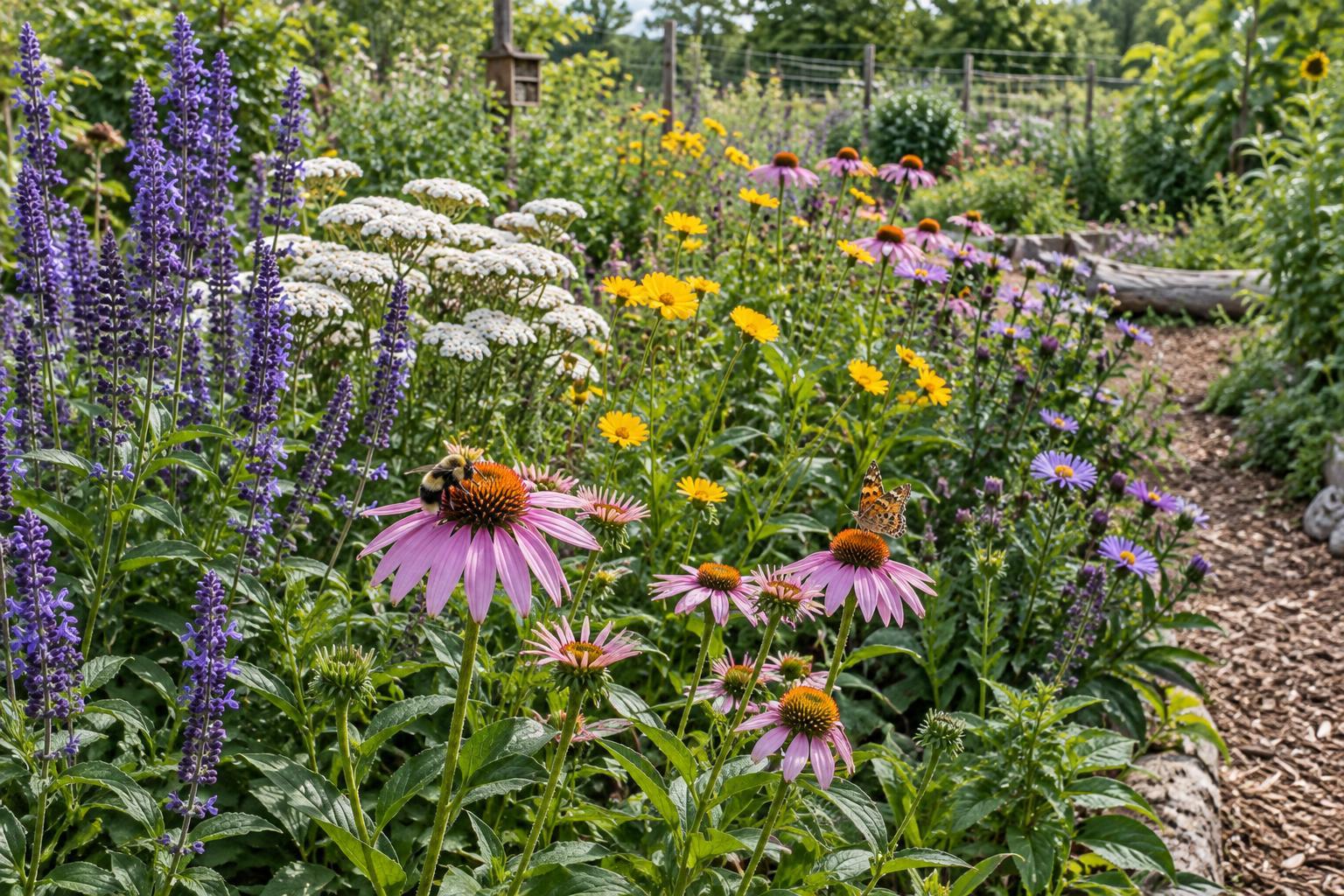
Plant options depend on local climate and soil. In suitable sunny, well-drained sites, yarrow, catmint, blanket flower, and some salvias can offer varied flower colors with modest water needs after establishment. Coneflowers may work well in many beds, while sedums provide contrasting foliage and late-season interest. Check each plant’s hardiness, mature size, and local suitability before buying; a familiar garden name is not a guarantee that every variety will thrive in your conditions.
Foliage can carry the design between bloom periods. Silvery leaves, fine grasses, and compact mounds of green or blue-green foliage make bright flowers stand out. Include a few plants with contrasting heights and shapes, but avoid collecting one of everything. Groups of three or more, where space allows, often read more clearly from a path than scattered single plants.
Group plants by water needs
Place plants with similar moisture needs together so watering can be targeted. A slightly thirstier cluster near a path or water source may be easier to care for than the same plants scattered across the bed. Reserve the driest, hottest spots for plants that tolerate those conditions, and use less exposed edges for plants that appreciate a little more moisture.
Drought tolerance usually develops after roots have had time to spread. Water new plants deeply enough to moisten the root zone, then check the soil before watering again. A finger test a few inches below the surface can be more useful than watering on a fixed calendar. Frequency will change with weather, soil, plant size, and season. During prolonged heat or severe drought, even established plants may need supplemental water.
Water at the soil level when possible, and give it time to soak in rather than running onto paths. Keeping leaves reasonably dry can also reduce some common foliage problems. If a community bed uses a shared hose or irrigation system, label the watering zones so helpers know which areas need attention.
Mulch and maintain with a light touch
A layer of organic mulch can slow surface evaporation and reduce weeds that compete for water. Spread it over bare soil, but leave a small gap around stems and plant crowns. Replenish it as needed rather than piling new mulch onto old layers. For plants that require especially fast-draining conditions, confirm that the chosen mulch suits them before applying it close to their crowns.
Weed regularly while unwanted plants are small. Remove spent flowers when it improves the bed’s appearance or encourages repeat bloom, but consider leaving some seed heads for visual interest and wildlife. Divide crowded perennials when their growth slows or the center becomes sparse. These modest tasks are easier to share than an occasional major rescue effort.
In a community space, post a short care note with plant names, watering guidance for new additions, and the location of tools. Keep a record of what survives dry periods and what needs frequent help. Over time, replacing poorly suited plants with better matches can make the bed both more colorful and easier to maintain.