Give each communication channel a job
In a community garden, a missed message can mean an unwatered bed, an overlooked workday, or a member who feels excluded from a decision. Sending every announcement through every channel may seem like the safest approach, but it can make important details harder to find. Start by agreeing on what belongs where. Meetings can be used for discussion and decisions, a noticeboard for information people need while on site, and online updates for reminders and records people can read from home.
Make one place the dependable home for essential information, even if you repeat it elsewhere. For example, the noticeboard might always show the next gathering, shared-tool rules, and a contact method, while an online message repeats upcoming dates. Tell members where to look for changes and who is responsible for posting them. A simple routine is easier to maintain than a complicated system with many rarely checked accounts.
Make meetings useful and welcoming
Hold meetings when there is something members need to discuss, rather than expecting everyone to attend for routine announcements. Share a brief agenda beforehand so people can prepare, and distinguish decisions from open questions. At the meeting, allow time for quieter members to contribute without requiring anyone to speak in front of the whole group. If a topic affects only a few beds or a particular work area, a smaller conversation may be more productive.
End each meeting by stating what was decided, what still needs input, and who will do each task. Send a short summary afterward for members who could not attend. Avoid treating absence as agreement on a significant change, especially if the change affects access, shared supplies, or garden rules. Where possible, give members a clear way to comment before a final decision and explain when that opportunity closes.
Keep the noticeboard easy to scan
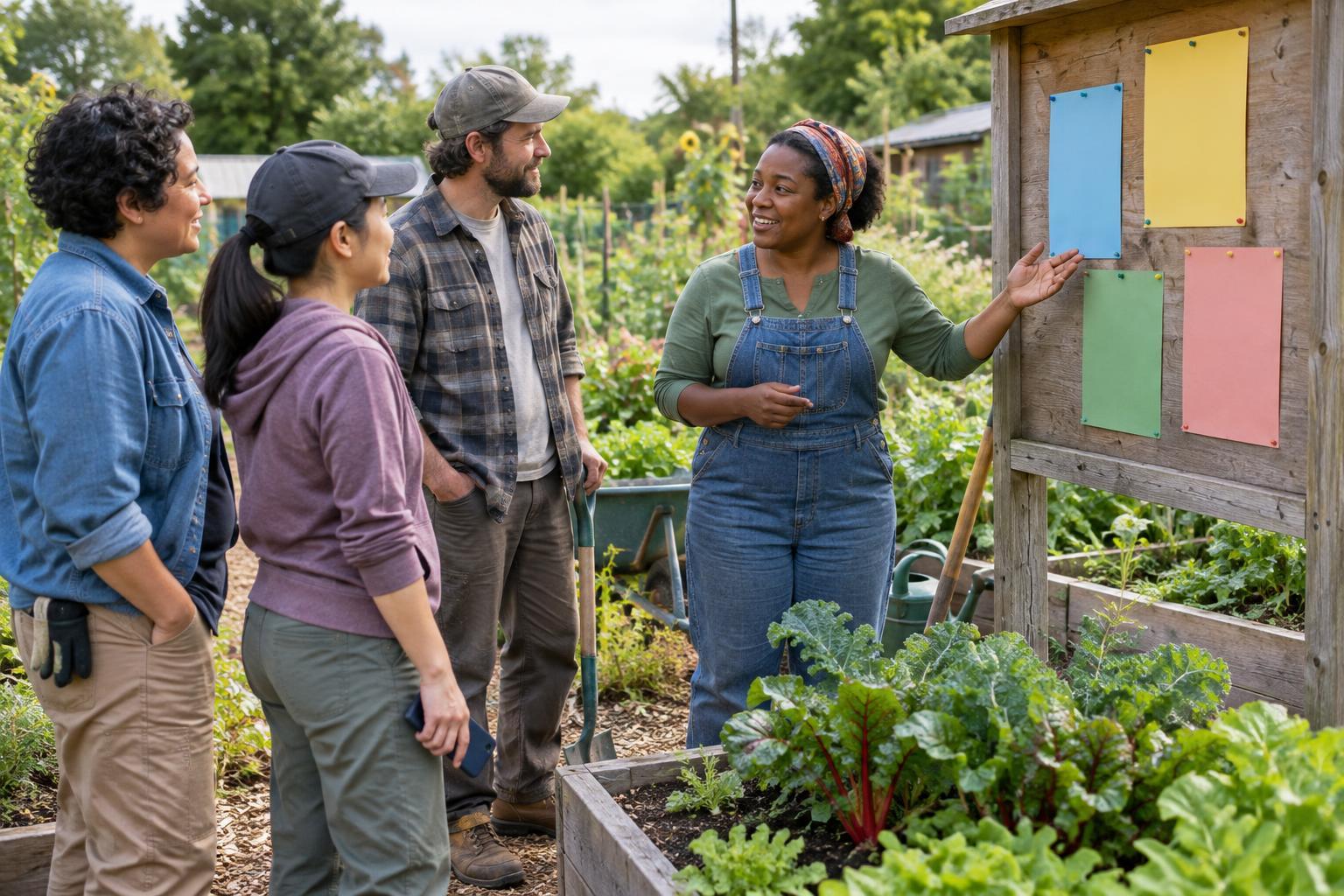
A garden noticeboard works best when members can understand it in a quick glance. Put time-sensitive information near the top: the next work session, a temporary water interruption, or a request for help with a shared task. Keep standing information, such as tool-return instructions and contact details, in a separate area. Date each notice and remove it when it no longer applies; old announcements can make the whole board seem unreliable.
Choose a location members are likely to pass and protect papers from rain where practical. Use readable type or clear handwriting, and avoid relying only on color to signal urgency. Leave room for member contributions, but set a basic expectation about what may be posted and who checks the board. If the garden has members who do not visit frequently, repeat consequential notices through another agreed channel.
Use online updates without making them a barrier
Email, a group message, or a shared page can help members coordinate between visits. Pick a tool that most members can use comfortably, then keep updates predictable. A brief message with a clear subject or opening line is often more helpful than a long stream of replies. Include the action needed, the relevant date, and where to ask questions. For ongoing projects, a compact recap can keep a decision from getting buried in conversation.
Online access and preferences vary. Ask members how they would like to receive important updates, and offer a reasonable alternative for those who do not use the chosen tool. Before adding someone to a group chat or sharing a contact list, ask permission. Keep personal concerns out of broad group messages; a direct, respectful conversation is usually a better first step when a problem involves one person.
Create a routine members can trust
Communication improves when members know what to expect. A coordinator might check the noticeboard regularly, send a short update after meetings, and name a backup person for times they are away. Encourage members to report practical problems, such as a broken hose or an unclear task assignment, through a known contact route. When someone raises an issue, acknowledge it even if the answer will take time.
Review the system with members from time to time. Ask whether announcements arrive early enough, whether the noticeboard is legible, and whether people understand how decisions are made. Adjust the routine rather than adding channels automatically. The goal is not to send more messages; it is to make the information needed to care for the garden easy to find, act on, and discuss.