Start with the job the groundcover needs to do
“Groundcover” describes a role, not one type of plant. Some low-growing plants form tight mats, while others make loose drifts with taller leaves or flowers. Before choosing one, decide whether the area needs a neat border, a planted space beneath shrubs, a soft edge beside a path, or coverage for a patch of exposed soil. The right choice for one job may be frustrating in another.
Look at the site through a full growing season if you can. Note how much direct sun it receives, whether the soil stays damp or dries quickly, and where water runs after rain. Check for competition from tree roots and for obstacles such as hose connections or irrigation heads. A plant suited to those conditions will usually need less intervention than one chosen mainly for its appearance in a nursery pot.
Plan for the mature spread
Groundcovers fill space in different ways. Some grow outward in clumps; others extend by stems that root as they travel or by underground growth. Read the plant label for expected width and spacing, then consider what lies beyond the planting area. A quick spreader may be useful in a large, defined bed but troublesome next to small perennials, vegetable plots, or a shared path.
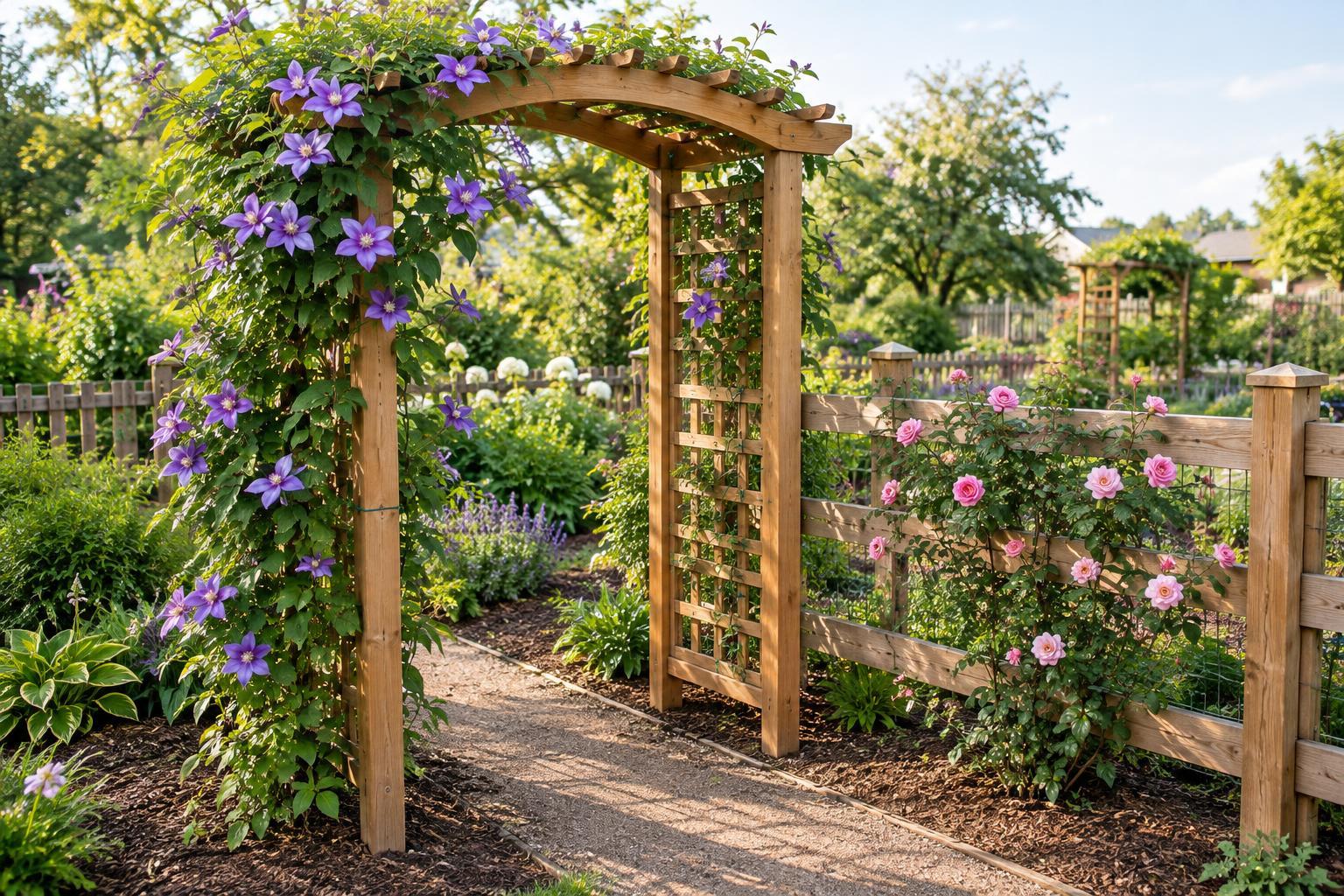
In a community garden, boundaries matter as much as coverage. Leave room to inspect the edge of the planting and trim it without disturbing a neighbor’s bed. Where a plant’s behavior is uncertain, try a small patch before filling a large area. Check locally before planting a species known to spread freely: a groundcover that behaves politely in one setting may escape into nearby beds or natural areas in another.
Match the plant to the amount of foot traffic
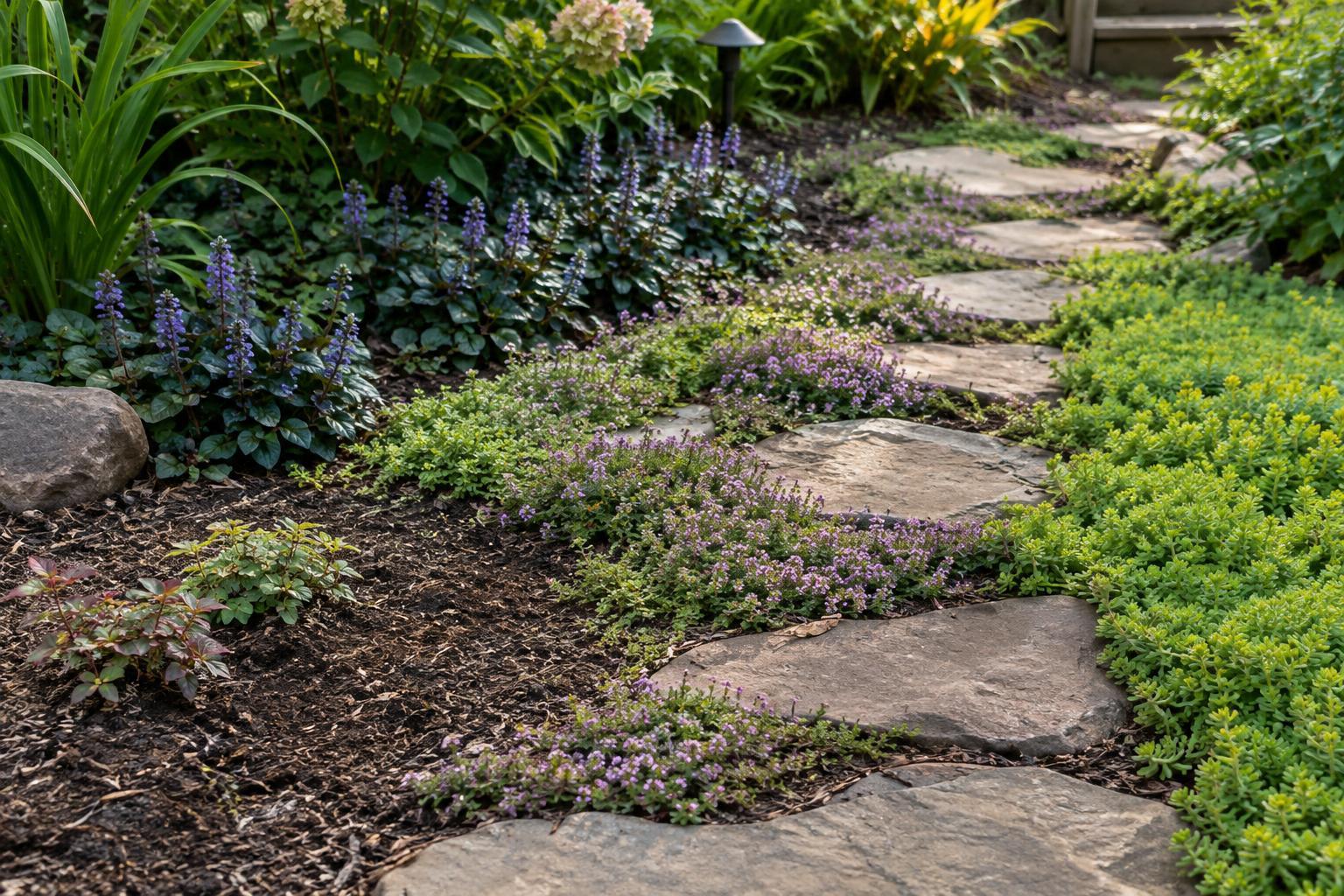
Low-growing does not automatically mean walkable. Delicate stems and broad leaves can be damaged by repeated steps, even when a plant looks like a lawn substitute. For an area crossed only during occasional weeding, a resilient planting with stepping stones may be enough. If people regularly move wheelbarrows, carry tools, or take a shortcut through the bed, use a firm path and plant groundcover alongside it instead.
Think about traffic when plants are wet and when the soil is soft. Footsteps can compact the soil beneath a planting as well as break the growth above it. In shared spaces, make the intended route obvious and wide enough for the people and equipment that use it. A clearly edged path protects the plants while making access easier for gardeners and visitors.
Count the maintenance after planting
A planted area is rarely maintenance-free. New groundcovers need watering while they establish, and open spaces between plants still need weeding. Mulch can help cover those gaps, but keep it clear of stems and crowns. Once the planting fills in, the work may shift to edging, removing stray growth, clearing fallen leaves, or dividing crowded clumps.
Consider what a plant will look like outside its peak season. Flowers can be appealing, but spent blooms may need cutting back; evergreen foliage may look tidy for longer but still collect debris. In a small ornamental bed, a slower plant that needs occasional weeding might be easier to manage than a vigorous one that needs frequent containment. Choose a level of upkeep that the people caring for the space can realistically sustain.
Make a small trial before committing
Compare a few candidates by their site needs, mature height and width, method of spreading, and expected response to traffic. Include their maintenance tasks on that list. Rather than selecting by flower color alone, picture each plant at the edge of the bed, around nearby plants, and at the time of year when the space gets the most use.
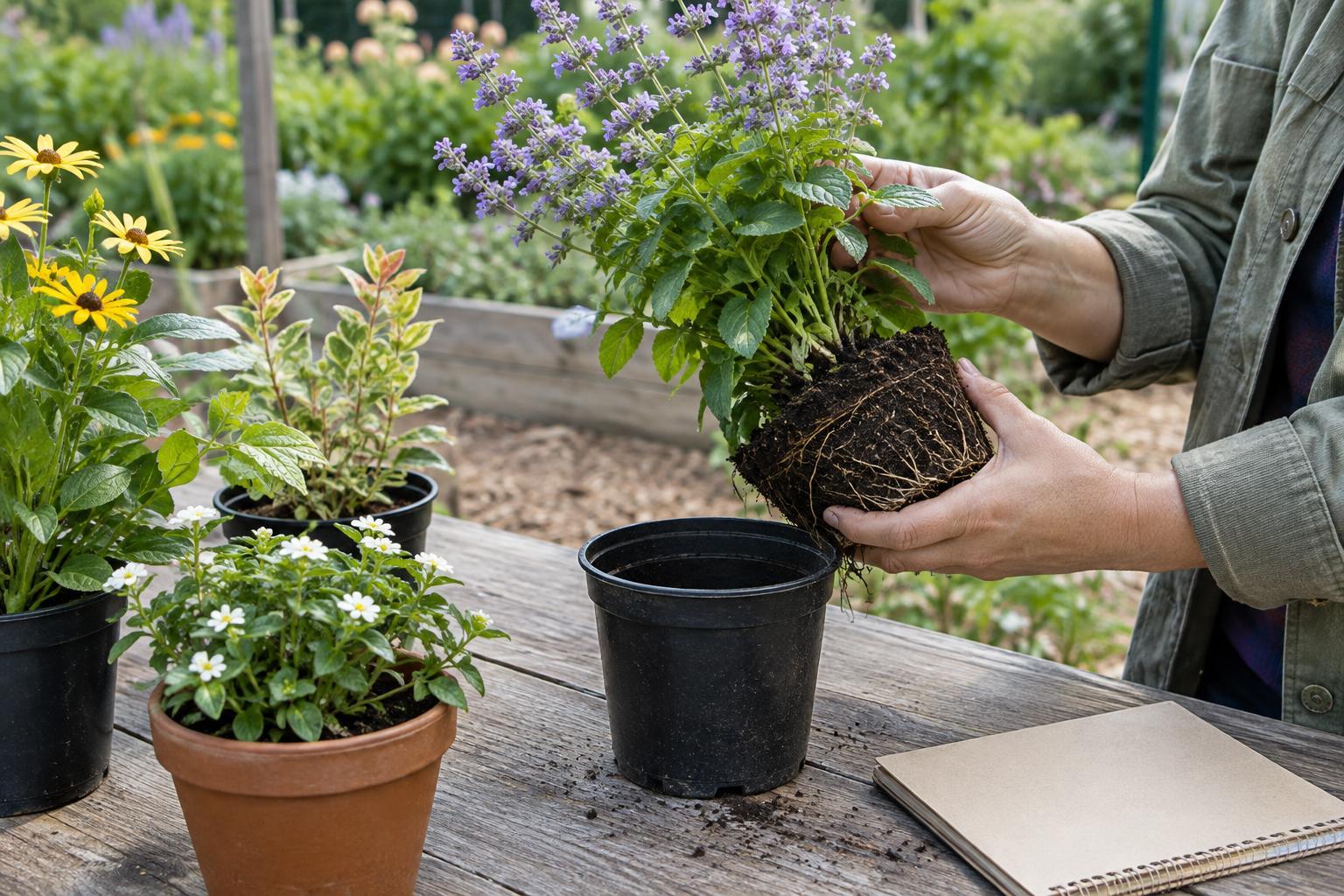
A trial planting offers a practical check. Mark its boundary, give it appropriate care, and watch how it grows before extending it. If it struggles, revisit the light, moisture, and soil conditions; if it pushes past its allotted space, decide whether regular edging is worthwhile. A successful groundcover is one that fits both the garden and the gardeners’ capacity to look after it.