Start by observing the shade
A garden bed described as “shady” may receive several hours of gentle morning sun, brief patches of midday light, or almost no direct sun at all. Watch the space at different times of day before choosing plants. Notice whether buildings cast steady shade or a tree canopy creates shifting light. Check again as trees leaf out: a bed that looks bright in early spring may be much darker in summer.
The ground matters as much as the light. Beds beneath mature trees can be dry because roots compete for water, while shade near a wall or low spot may stay damp. After watering or rain, feel the soil a few inches down and note how quickly it dries. These observations will help you select plants for the conditions you have rather than for the word “shade” on a label.
Build the planting around foliage
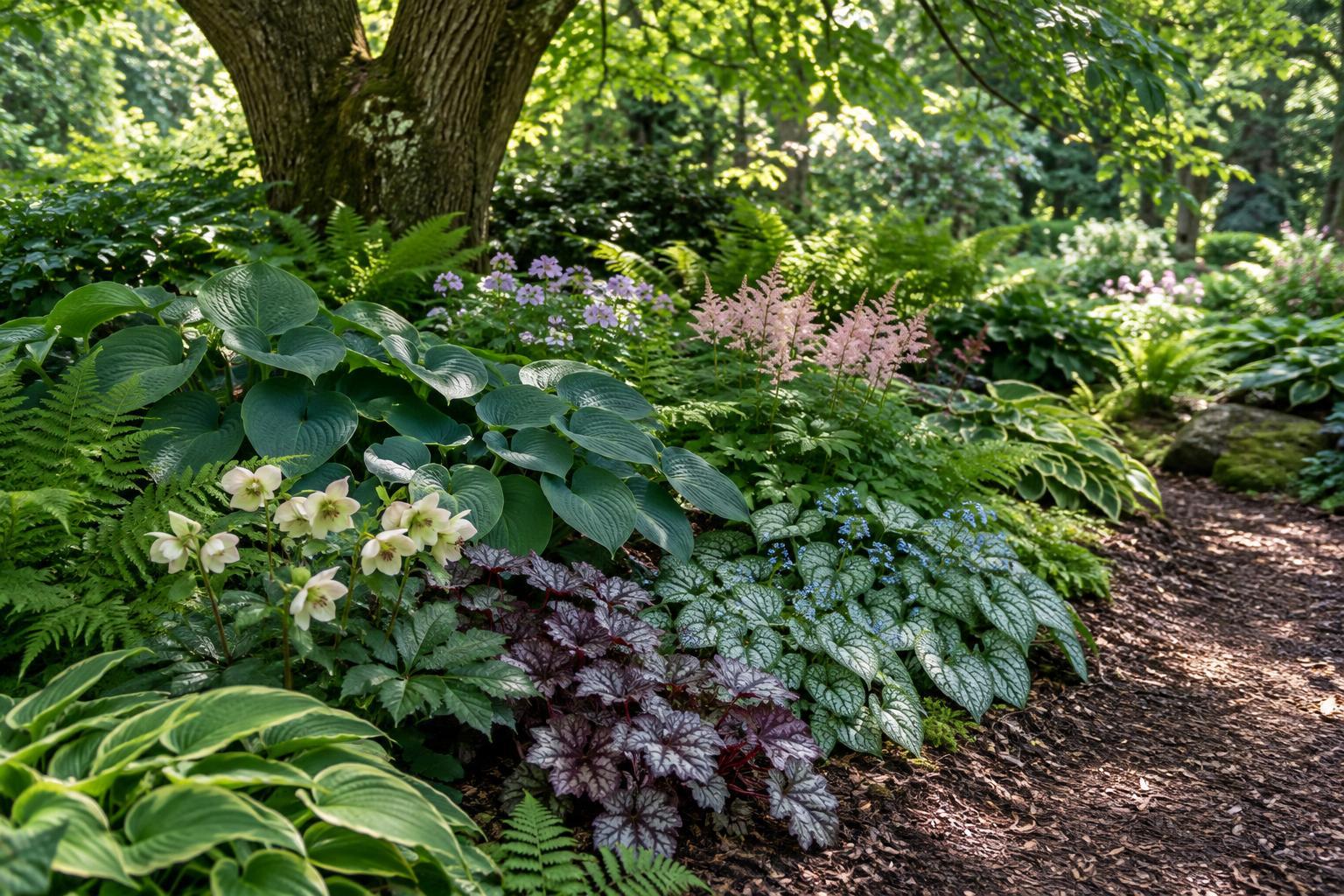
Flowers can be brief in a shady bed, so use leaves to provide a dependable framework. Hostas offer broad leaves in green, blue-green and variegated forms, though they may need protection where slugs or browsing animals are a problem. Many ferns bring a finer texture that contrasts with those broad leaves. Heucheras add rounded leaves in a range of colors; their performance varies by variety, so check whether a particular selection suits your climate and level of shade.
For drier shade, consider plants such as epimedium, which can spread gradually into a low layer once established. In a reliably moist bed, astilbe contributes divided foliage even after its flower plumes fade. Leave enough space for each plant’s mature width rather than filling every gap on planting day. A small number of repeated foliage shapes and colors often creates a calmer effect than one of every plant at the nursery.
Choose flowers for their season and site
Shade-tolerant flowering plants still need the right conditions to bloom well. Hellebores can bring flowers early in the season in suitable climates, followed by attractive leaves. Foamflower can add spring flowers and low foliage where the soil does not dry out severely. Astilbe offers upright summer plumes but is a better match for consistently moist soil than for a thirsty bed under a tree.
Annuals can fill gaps while perennials grow in. Begonias provide flowers in many shaded settings, while coleus is grown chiefly for its colorful leaves; both are typically treated as warm-season plants where frost occurs. A plant labeled for partial shade may flower less in a bed with almost no direct light. If color is the main goal, test a small group in the intended spot before committing to a large planting.
Check plant tags for mature size, moisture needs and suitability for your local climate. Also check whether a plant spreads aggressively in your area. If you want to use native woodland flowers, choose species suited to your region and buy nursery-propagated plants rather than removing them from wild spaces.
Make the bed easy to care for
Prepare planting pockets without aggressively digging through established tree roots. Add compost where appropriate, then cover bare soil with a modest layer of mulch, keeping it clear of plant crowns and tree trunks. Water new plants regularly while they establish, even if they are described as drought tolerant. Later, adjust watering to the soil and the needs of each planting group; a dry-shade corner should not share a watering plan with a moisture-loving border.
In a shared garden, leave a visible edge and enough room to reach plants without stepping into the bed. Group plants with similar water needs together, and label young perennials so volunteers can distinguish them from weeds. Agree on who will water during establishment and when faded stems or damaged leaves should be removed. Simple records of what thrived, struggled or spread will make next season’s choices easier.
Aim for interest beyond the flowers
Think of a shady bed as a sequence rather than a single display. Early flowers can give way to summer foliage; later, leaf texture and shape can carry the design after blooms are gone. Repeat a fern or another reliable foliage plant along the bed, then place flowering plants in small groups where they can be seen from a path.
The most successful choices are not necessarily the showiest ones. They are plants that fit the bed’s actual light and moisture, have room to grow, and can be cared for by the people who share the space. Start with a few well-matched combinations, observe them through a season, and expand what works.