Start with the space, not the flowers
A vine can make a plain boundary feel welcoming, provide seasonal color, and draw attention to a garden entrance. Before choosing one for its flowers, look at the place where it will grow. Note how much direct sun it receives, whether the soil stays damp or dries quickly, and how much room is available at the base and overhead. Check the mature size on the plant label rather than judging by the vine in its nursery pot.
In a community garden, consider the other side of the fence as well as the side you see. A vigorous vine may shade a neighbor’s bed, reach into a walkway, or make it difficult to repair a gate. Decide who will water and prune it, and leave enough clearance for people to move comfortably beneath an arbor. If you cannot commit to regular trimming, a more restrained vine is usually a better choice than one that needs frequent containment.
Match the vine to its support
Flowering vines climb in different ways. Twining stems wrap around narrow poles, wires, or slats. Tendril-bearing vines grasp slender material such as netting or a trellis. Some vines do not hold on reliably at all and need their stems tied in place. A smooth, broad fence panel may offer little for any of these plants to grip, even when the fence itself is strong.
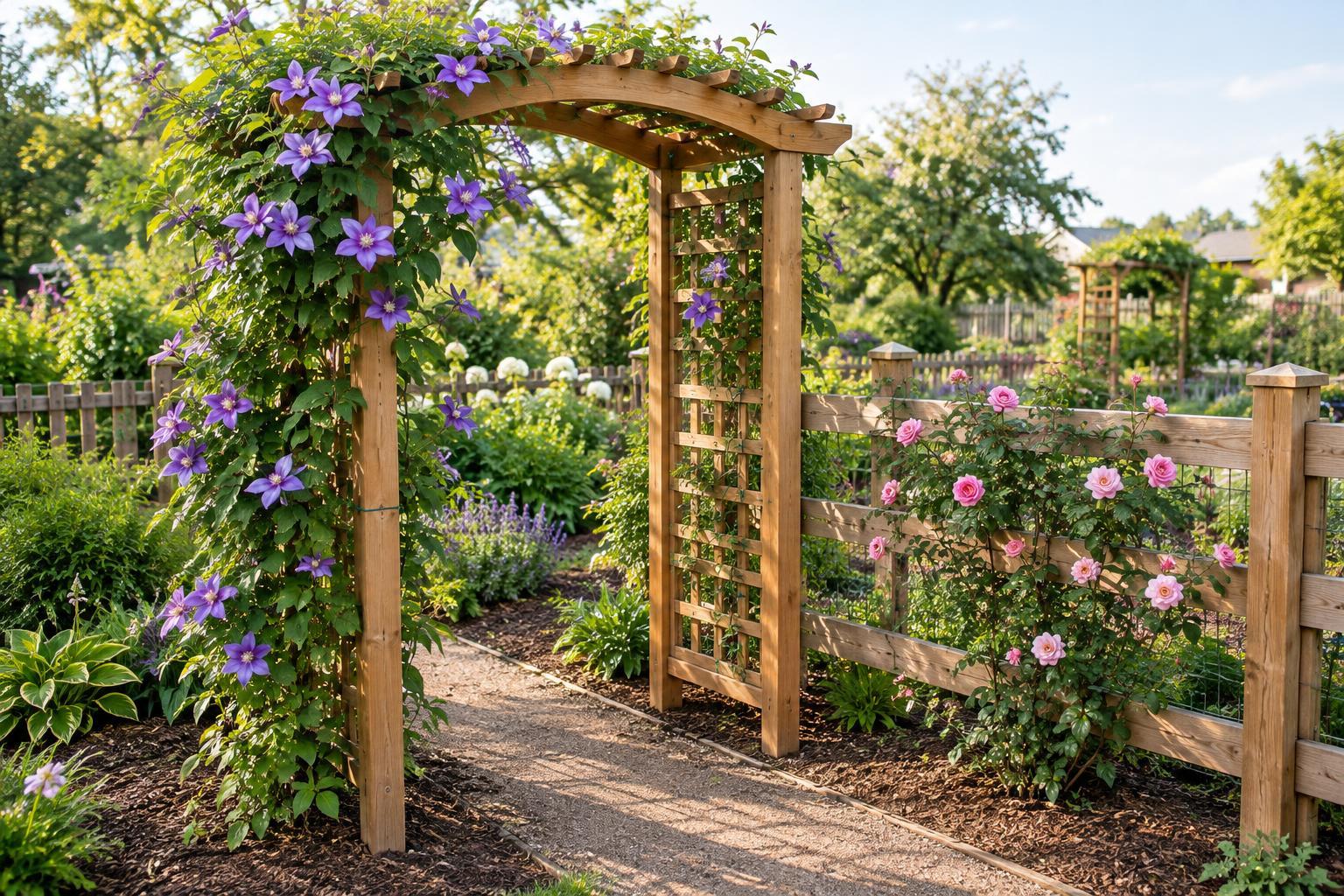
Choose the support with the mature plant in mind. A light trellis may suit a modest annual vine but buckle under a large perennial with woody stems. An arbor needs sound posts, secure joints, and enough overhead strength to carry growth that becomes heavier after rain. Attach a separate trellis to a fence if the fence design permits it; this can give stems a place to climb while leaving some access for maintenance. Avoid training vines across latches, hinges, or utility fixtures.
Use soft garden ties where a vine needs guidance, and leave room for stems to thicken. Check ties during the growing season so they do not cut into the plant. As growth reaches the top of a structure, guide it across available supports rather than letting a dense mass gather in one spot.
Choose flowers with the whole season in mind
Flower color is only one part of a useful choice. Consider when the plant blooms, what its leaves look like after flowering, and whether it drops petals or fruit onto a path. A deciduous vine can let more light through in the cooler part of the year, while an evergreen vine may provide longer-lasting cover where the climate allows it. For an arbor, think about the view from underneath as well as from a distance.
Clematis varieties offer a range of flower forms and growth sizes, but their pruning needs differ, so keep the variety name and care information. Climbing roses can be trained along a fence or arbor, though they generally need tying and room for air to move through their stems. Annual flowering vines can be useful where you want to test a location before planting something permanent. Choose varieties suited to your growing conditions, and check local guidance before planting any vine that may spread beyond its intended space.
Plant for healthy growth and easy upkeep
Prepare a planting area with room for roots rather than squeezing the vine against a post. Follow the plant’s label for planting depth and spacing. Water thoroughly after planting, then keep an eye on soil moisture while roots establish; a roof overhang or dense fence can leave the planting spot drier than nearby beds. A layer of mulch can help moderate soil moisture, provided it is kept away from the stems.
Set up the climbing route early. Position young shoots toward the support and tie them loosely if needed. Spreading several stems across a trellis usually gives more even coverage than sending everything straight upward. Keep nearby beds in mind when feeding or watering: a vine growing beside vegetables or smaller flowers should not take over their root space or block their light.
Keep the structure visible and the vine manageable
Inspect both vine and support as part of routine garden care. Remove dead or damaged growth, look for ties that have become tight, and clear stems from paths, neighboring plots, and gate hardware. Prune at a time appropriate for the plant, since cutting at the wrong point in its growth cycle may remove developing flower buds. If you are unsure, start with light maintenance and identify the vine before making major cuts.
A flowering vine should make a fence or arbor more enjoyable, not hide problems. Leave enough of the structure visible to spot loose fasteners, rot, or leaning posts. In a shared space, a simple maintenance plan—who checks the ties, who prunes, and how far the vine may spread—can be as valuable as the planting plan. The best result is a vine whose flowers, growth habit, and upkeep all fit the place it has been given.