Start with the people who will use the garden
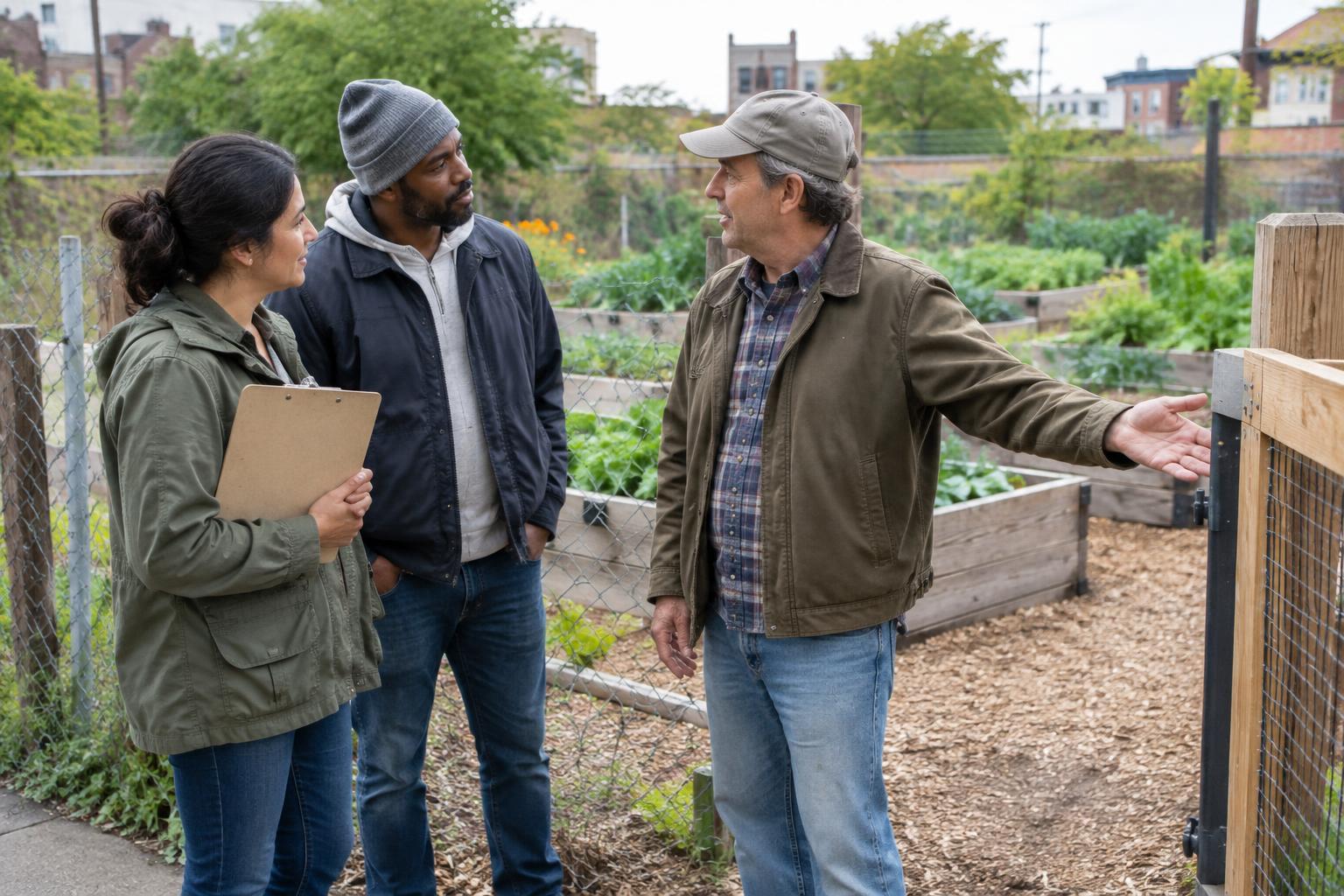
Before comparing vacant lots, ask what neighbors want the garden to do. A group hoping to grow vegetables for household use may need different space from one planning pollinator beds, children's activities, or a welcoming place to gather. Talk with prospective gardeners and nearby residents early. Ask about travel routes, preferred work times, accessibility needs, and whether they would welcome shared tasks such as watering and path maintenance.
Look at how people would reach each site. A garden that is convenient on a map may be difficult to enter with a wheelbarrow, mobility aid, or stroller. Notice sidewalk conditions, slopes, gates, and safe places to unload supplies. Also consider who lives beside the site. Paths, compost bins, and gathering areas should be placed with neighboring homes and businesses in mind. A good location makes participation easier without creating avoidable problems for others.
Observe sunlight across the growing area
Most fruiting vegetables, including tomatoes and peppers, grow best with generous direct sun. Leafy greens and some herbs can tolerate less, but deep shade limits what a food garden can produce. Visit a possible site at several times of day and note where buildings, fences, and trees cast shadows. If possible, repeat your observations as the season changes: a sunny spot beneath a leafless tree may be shaded once it fills out.
Make a simple sketch showing the brightest areas and the places that stay shaded. This helps the group decide whether the site fits its goals rather than treating every square foot as equally usable. Shade can still serve a purpose for seating, tool storage, or plants suited to lower light. Remember that mature trees also compete for water and have roots that should not be damaged by digging or construction.
Confirm a dependable water plan
A nearby, usable water source can determine whether a shared garden remains manageable through dry periods. Do not assume that a visible faucet is available to the group. Find out who controls it, whether permission includes garden use, how costs will be covered, and when the supply can be accessed. If the garden will rely on hoses, check the distance to the beds and whether hoses would cross walkways or neighboring property.
Think about how watering will work when regular volunteers are away. Beds close to a water point are easier to tend, particularly for gardeners carrying cans by hand. Rain barrels may supplement a supply where permitted and practical, but stored rainwater does not remove the need for a reliable backup. A clear plan for equipment, costs, and responsibility is more useful than hoping someone will solve those questions after planting.
Investigate soil history before planting food
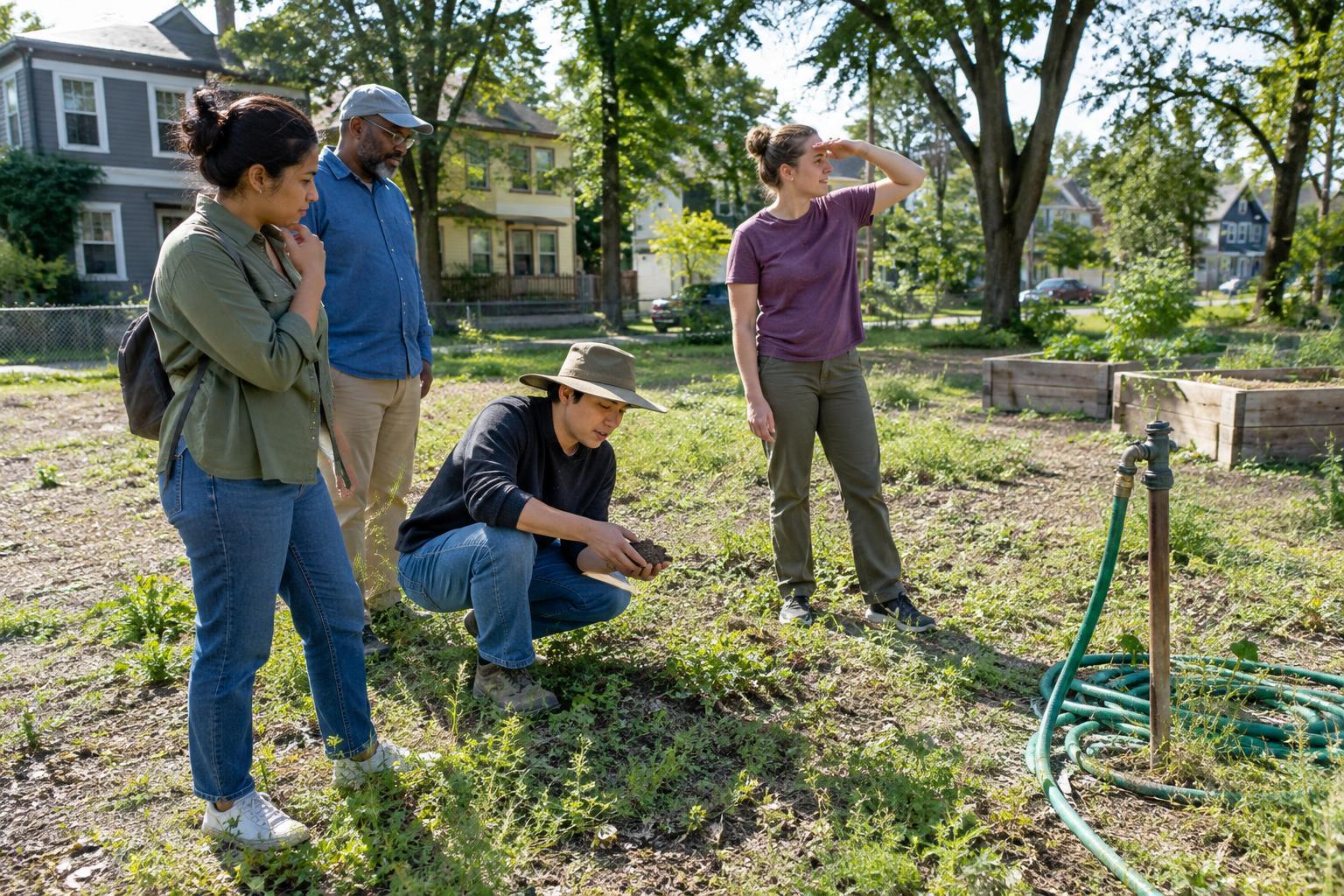
Healthy-looking vegetation does not tell the whole story about what is in the soil. Ask the owner or manager how the land was used and whether they know of past buildings, demolition debris, dumped materials, or chemical storage. Walk the site for rubble, stained ground, and other signs that warrant closer attention. If its history is unclear, treat that uncertainty as a question to resolve, not as evidence that the soil is safe.
For a food-growing project, consider appropriate soil testing before deciding where to plant in the ground. A local testing service or environmental office may be able to explain which tests fit a site's history and how to collect samples. Raised beds filled with suitable material may be an option, but they do not make surrounding soil, dust, or exposed paths irrelevant. Keep children and gardeners from disturbing suspect areas while the group evaluates the site. At the same time, assess drainage and soil structure: ground that stays waterlogged or is heavily compacted may need substantial preparation even when contamination is not a concern.
Choose a site the group can sustain
Before committing, clarify who can authorize garden use and what that permission covers. Discuss the expected length of use, access hours, structures, water, composting, and who is responsible for routine upkeep. A short-term site can still be worthwhile, but the group should know the limits before investing in permanent paths or beds. Leave room in the plan for gathering, deliveries, compost, and beds that gardeners can reach without stepping on growing soil.
Compare candidate sites using the same written checklist: sunlight, water, soil questions, access, permissions, and neighborhood fit. Mark unresolved items rather than guessing, and return for another visit when a question can be answered on site. The best choice is not necessarily the largest or most visible plot. It is the place where the proposed garden can grow safely, where people can take part, and where the work of caring for it has a realistic home.