Choose a workable place and size
Composting turns plant material and other suitable organic scraps into a dark, crumbly soil amendment. To begin, choose a spot that is easy to reach with a bucket and a wheelbarrow. Bare soil allows water to drain and gives soil organisms access to the pile, though a well-managed bin can also work on a hard surface. Leave enough space to add material, turn the pile, and collect finished compost without blocking a path.
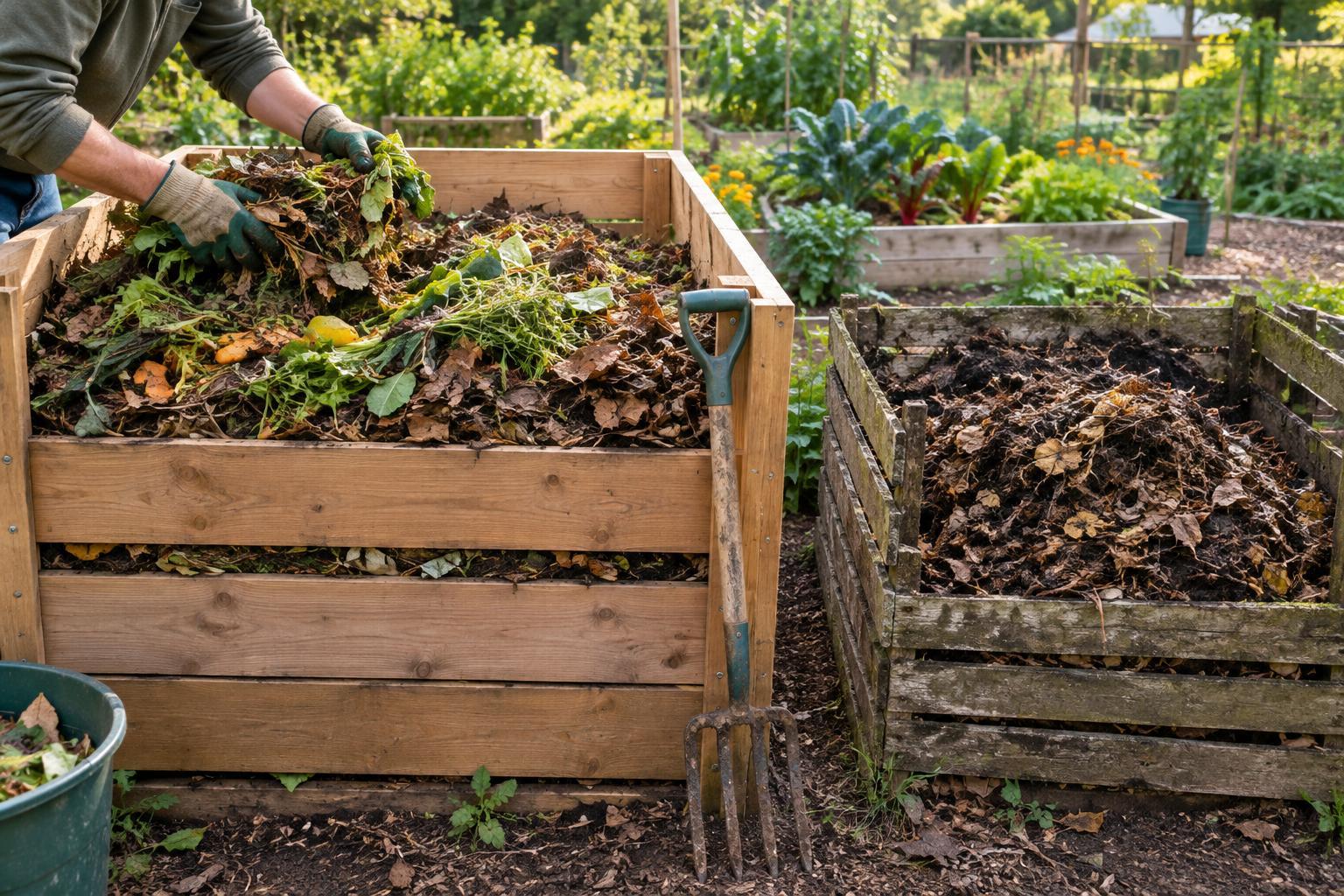
A pile needs enough material to hold some warmth, but it should still be manageable for the people tending it. A simple heap or open-sided bin is often sufficient. In a community garden, agree on where the pile belongs and who will maintain it before inviting contributions. A clearly labeled container for incoming scraps can keep the compost area tidy.
Combine browns and greens
Compost ingredients are often grouped as browns and greens. Browns, such as dry leaves, shredded plain cardboard, and small dry stems, provide carbon and help create spaces for air. Greens, such as fresh plant trimmings, vegetable scraps, and coffee grounds, supply nitrogen and moisture. The labels describe how materials behave in the pile, not necessarily their color: coffee grounds, for example, count as a green.
Start with a loose layer of coarse browns, then mix in greens and cover them with more browns. As a rough starting point, use more browns than greens by volume, especially when scraps are wet. Chop large pieces if convenient, but do not feel obliged to shred everything. A mix of sizes helps the pile hold together without becoming a dense mat.
For an uncomplicated garden pile, leave out meat, fish, dairy, oily food, and pet waste. Avoid adding plants with mature weed seeds or obvious disease if you cannot be confident the pile will heat evenly. Be cautious with grass clippings or hay if you do not know whether they were treated with a persistent herbicide. When in doubt about a material, keep it out of compost intended for growing beds.
Give the pile air without letting it dry out
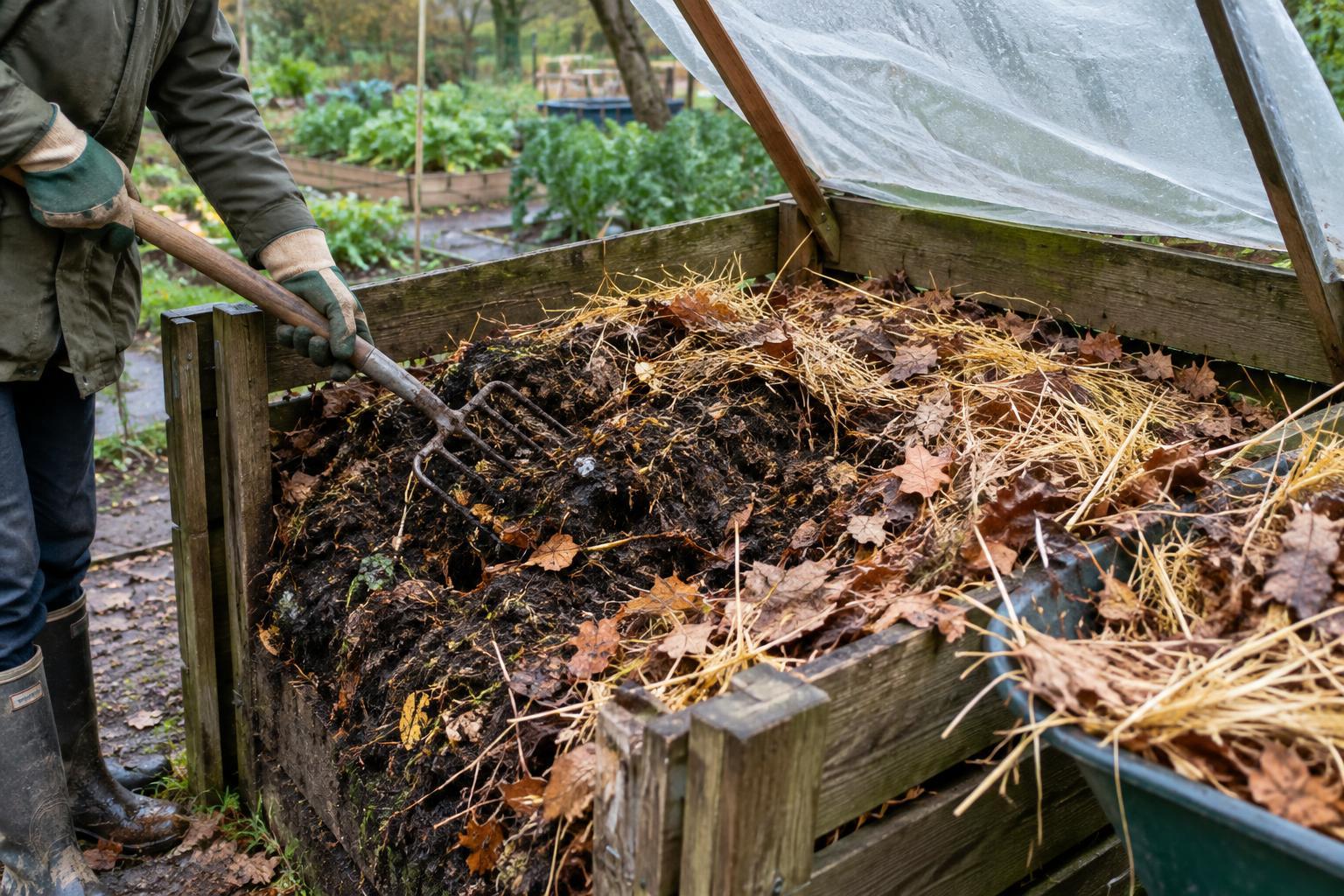
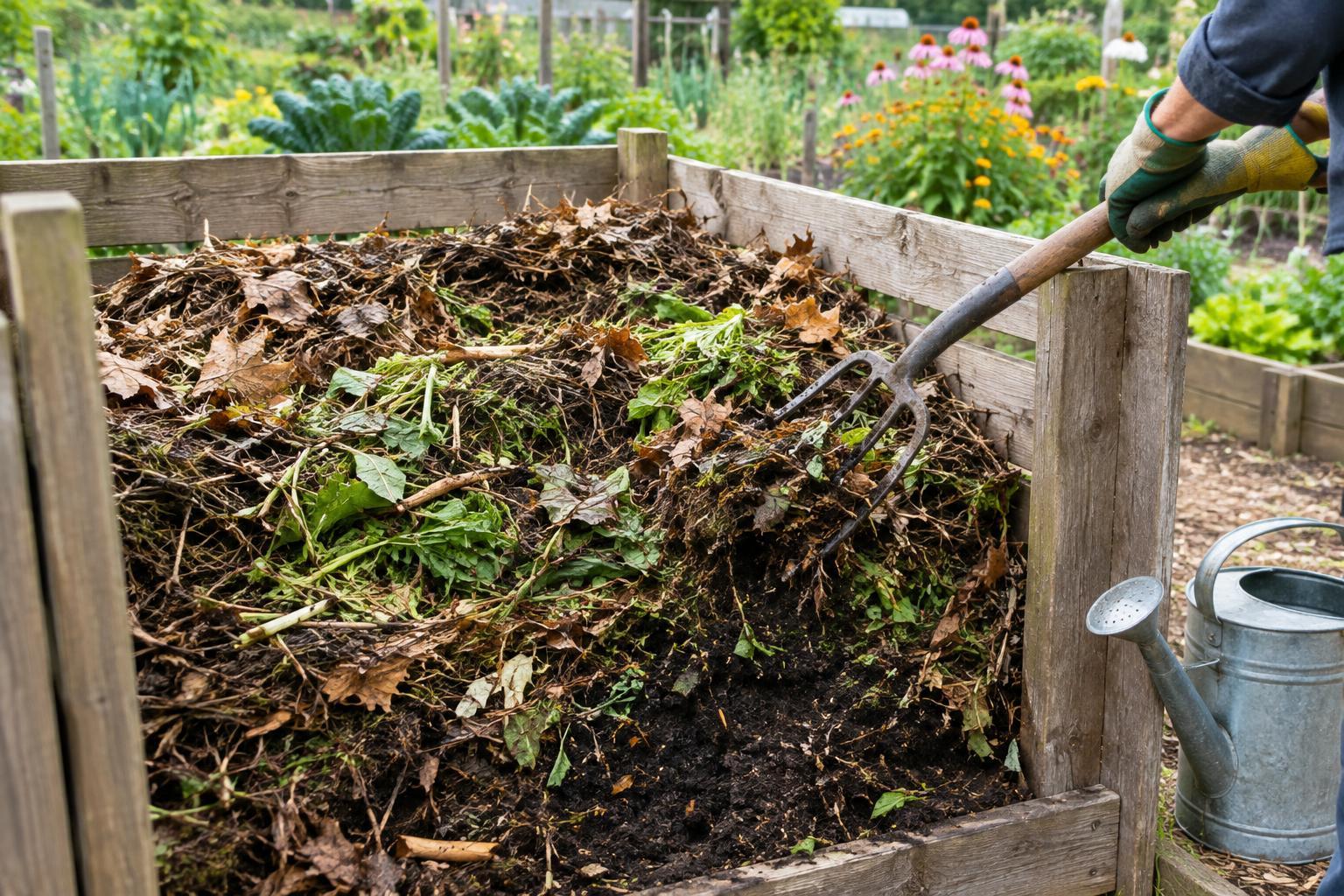
Decomposers need oxygen. Mix fluffy browns throughout the pile rather than packing materials into thick, separate layers. Shredded leaves are useful, but a pile made only of fine particles can settle tightly; a few small, coarse stems can help preserve air spaces. Turning the pile with a garden fork brings outer material toward the center and loosens compacted areas. You can turn it when it begins to flatten or smell stale rather than following a strict schedule.
Moisture matters just as much. Material in the middle should feel like a wrung-out sponge: damp to the touch, without water dripping when squeezed. If it is dry, add water gradually as you turn and check again after it has soaked in. If it is soggy, mix in dry browns and leave the pile loose enough to drain. A cover can keep out excessive rain or slow drying, but avoid sealing the pile so tightly that air cannot enter.
Read the signs and make small corrections
A healthy pile may settle, warm up, and develop an earthy smell. It does not have to feel hot at all times to make progress; smaller piles and cooler conditions can slow decomposition. If scraps remain recognizable for a long time, check moisture and airflow first. Dry material needs water, while a compressed pile benefits from turning and coarse browns.
A sour or rotten smell often points to too much moisture or too little air. Mix the pile, add dry browns, and cover fresh food scraps well. If the pile attracts pests, check that contributors are following the accepted ingredient list and bury permitted scraps beneath plant material. A compost pile should be manageable, not a daily puzzle: change one or two things, then give the mixture time to respond.
Use finished compost and keep the system going
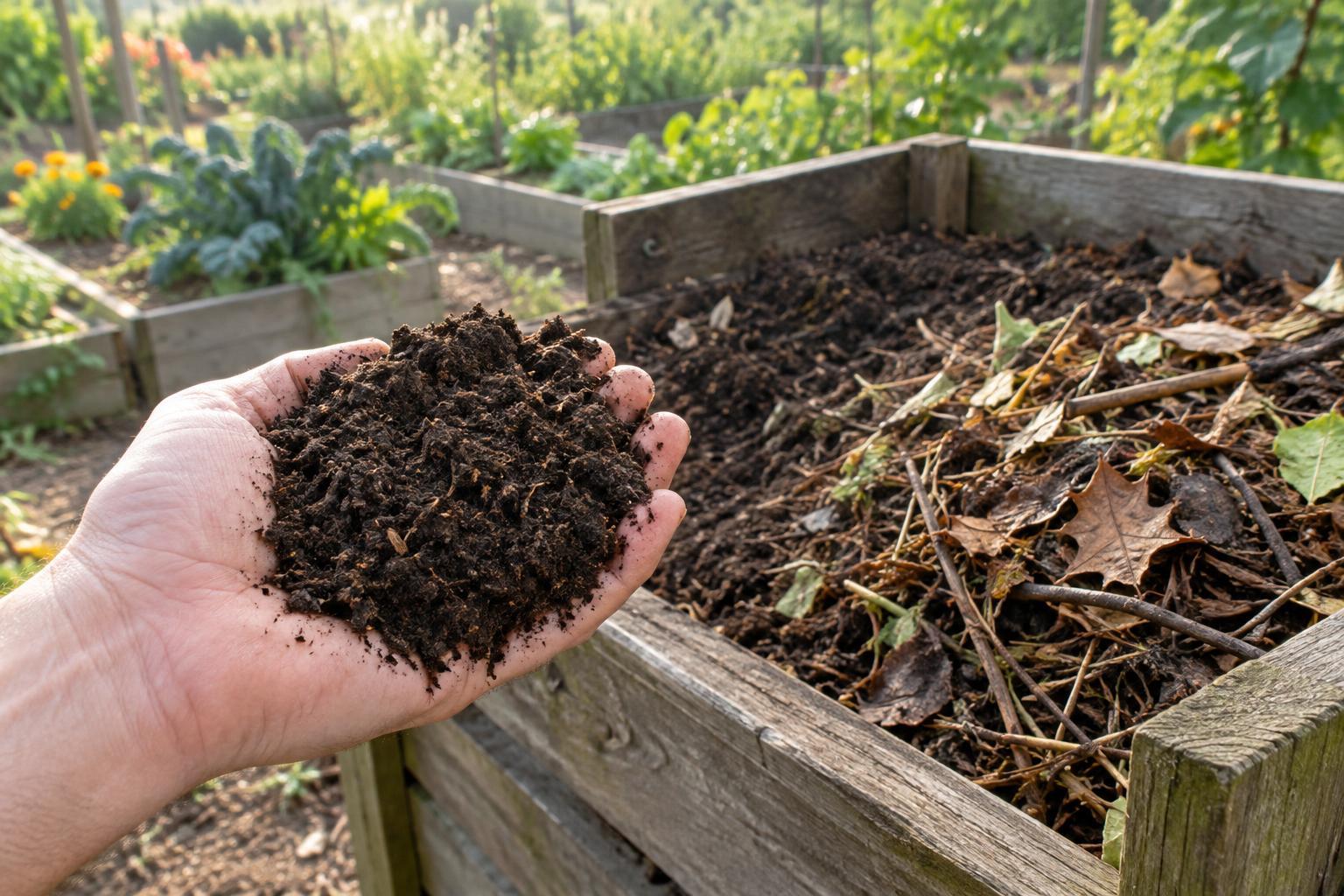
Compost is ready to use when most of it looks dark and crumbly, smells earthy, and no longer resembles the original scraps. Woody pieces may take longer; sift them out or return them to the active pile. If material is still slimy, strongly scented, or full of recognizable food scraps, let it continue decomposing before adding it to growing beds.
Spread finished compost over garden soil or work a modest amount into a new planting area. It improves soil structure and adds organic matter, but it does not replace every other aspect of soil care. In a shared garden, keep a supply of dry browns beside the pile and post a short list of accepted materials. Those two habits make it easier for every contributor to support the same balance of ingredients, air, and moisture.