Start with a safe walk-through
A summer storm can leave a garden looking worse than it is. Before reaching for pruners, walk the paths and take in the whole space. Look for fallen branches, leaning trees, damaged structures, exposed wires, loose fencing, and puddles that hide holes or debris. Keep clear of electrical hazards and unstable trees; those are not routine garden repairs. If the garden is shared, mark unsafe areas and let other gardeners know before work begins.
Resist the urge to step into every bed right away. Wet soil compacts easily underfoot, especially where people make repeated trips to inspect damage. Work from paths when possible and wait until the surface is less sticky before tackling jobs that require standing in a bed. A few photos or notes can help a group agree on priorities without everyone walking over the same soaked ground.
Triage plants before pruning
First separate plants that need immediate help from those that simply look battered. A tomato vine pulled off its support may be worth lifting promptly so fruit and stems are not lying on damp soil. A perennial flattened by rain may rise again as it dries. Gently shake excess water from heavy, leafy stems if you can do so without breaking them, then give plants time to show which parts are truly damaged.
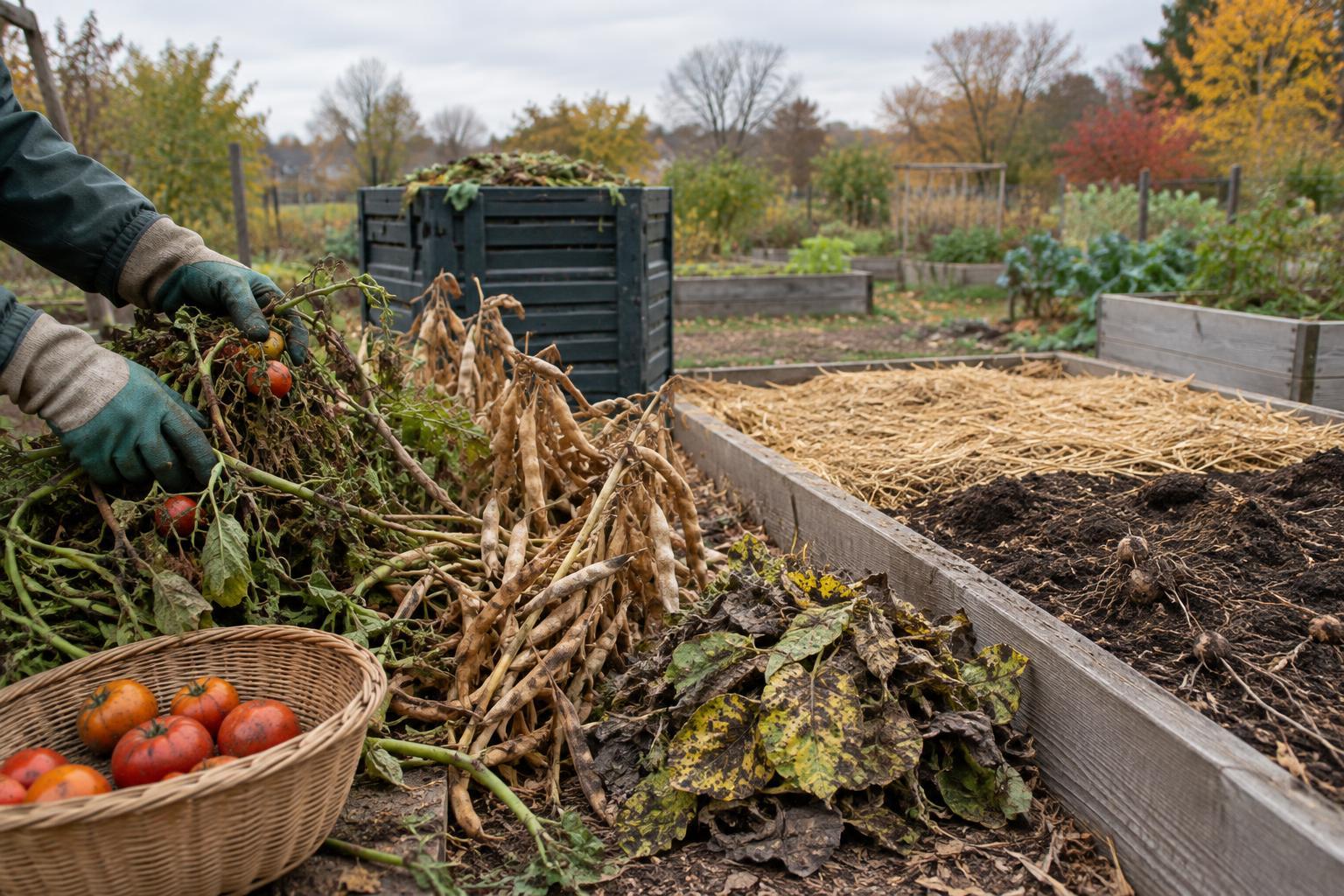
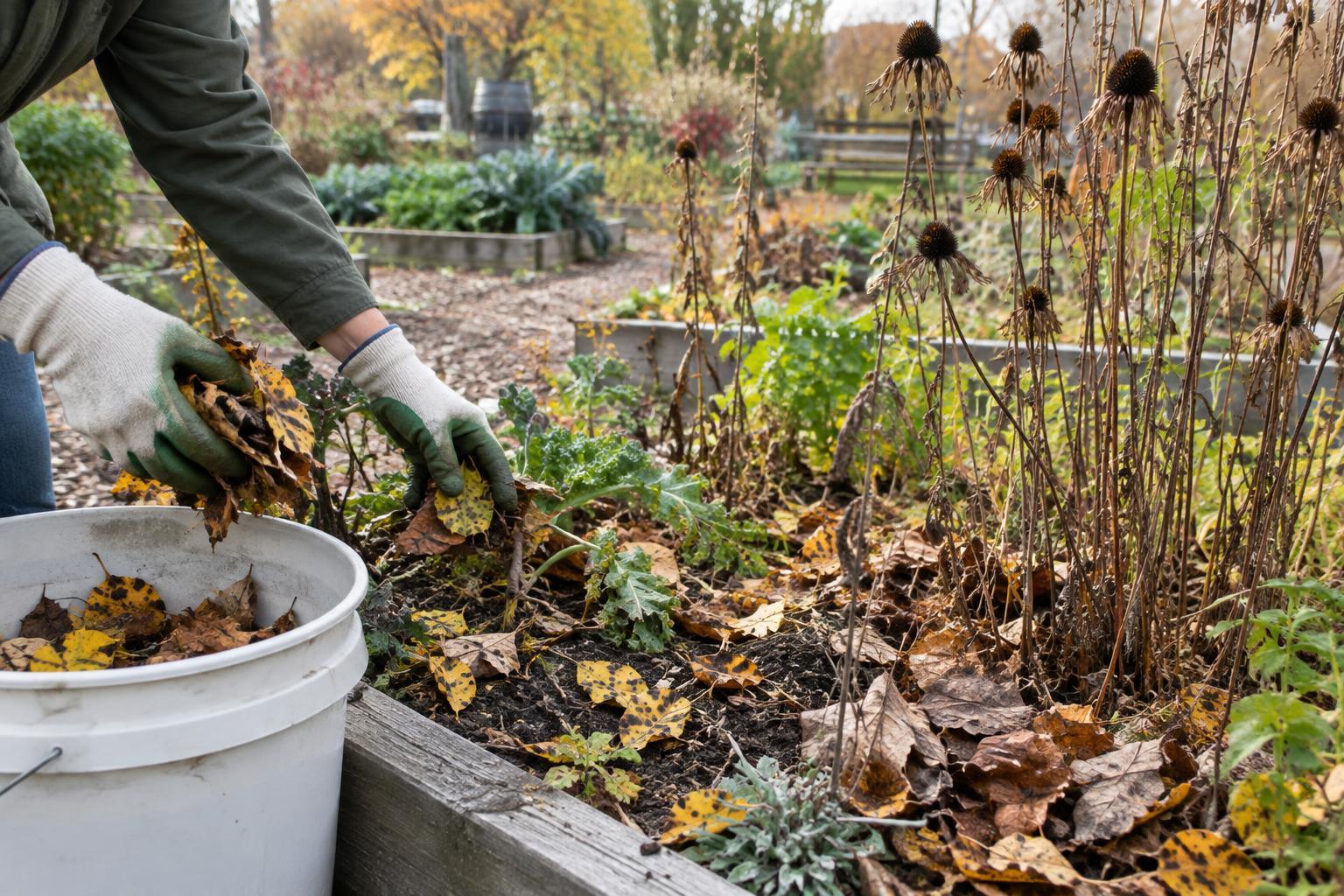
Remove stems that are snapped, hanging, or crushed, cutting back to a sound junction with clean tools. Avoid stripping away healthy foliage just to make a plant look tidy; leaves still help it recover. For a partly bent stem, a soft tie and a firm support may be enough. Check ties after a few days so they do not pinch swelling stems. Put visibly diseased material aside rather than mixing it into a pile of healthy trimmings, and follow your garden’s usual disposal practice.
Reset stakes, trellises, and shared structures
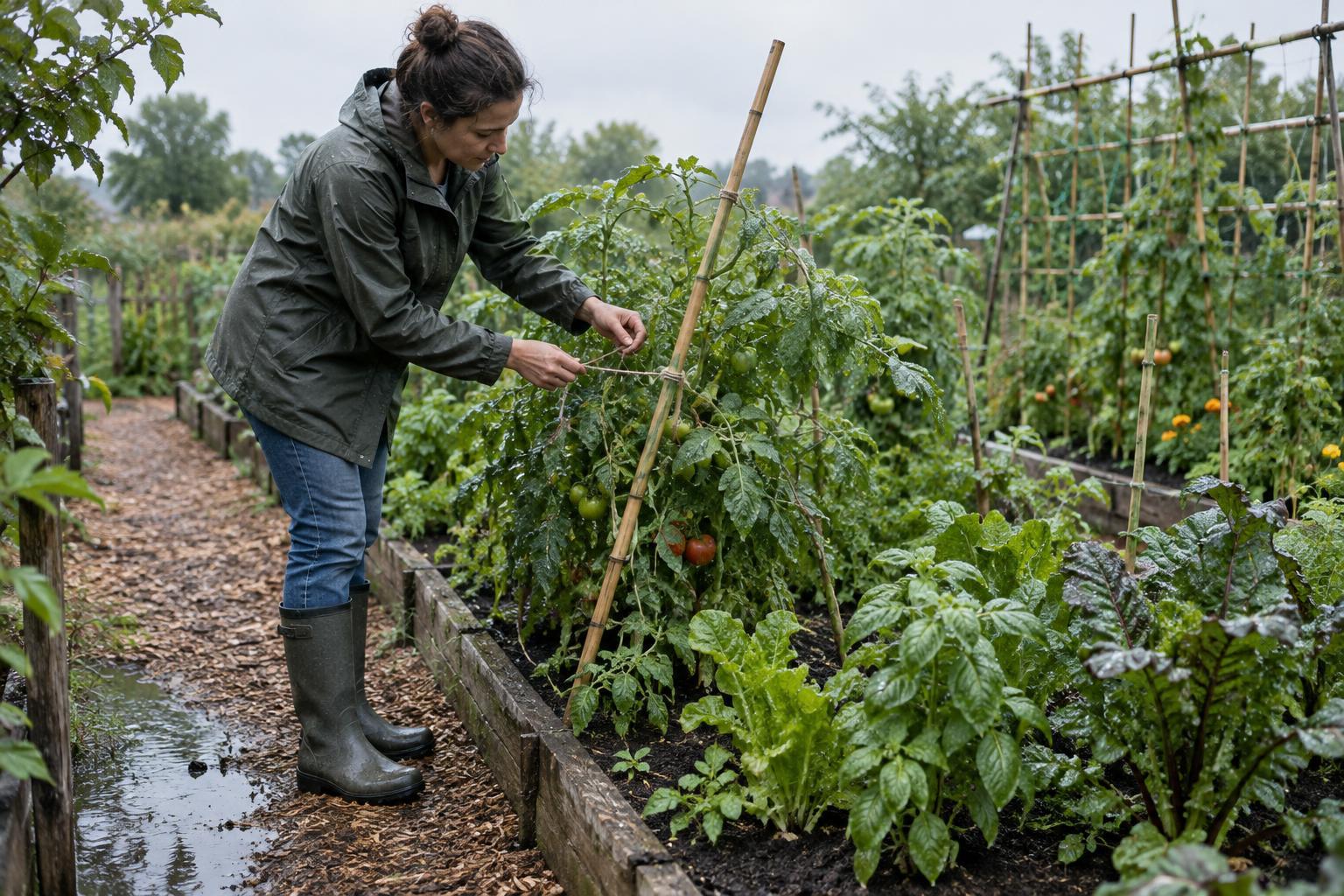
Wind can loosen a stake below ground even when it still looks upright. Test supports gently before fastening plants back to them. Re-seat or replace wobbly stakes, tighten loose trellis connections, and check that raised-bed edges and lightweight covers are secure. Do not pull a plant tightly against a support to force it back into its old shape; leave a little room for movement and growth.
Use wide, soft ties where stems touch supports, and place ties beneath a branch or fruit cluster that needs help. Heavy plants may need more than one attachment point so their weight does not hang from a single stem. In a community garden, inspect shared arches and fences before anyone relies on them. If a structure is damaged or too heavy to handle safely, close off the area until it can be properly repaired.
See where the water went
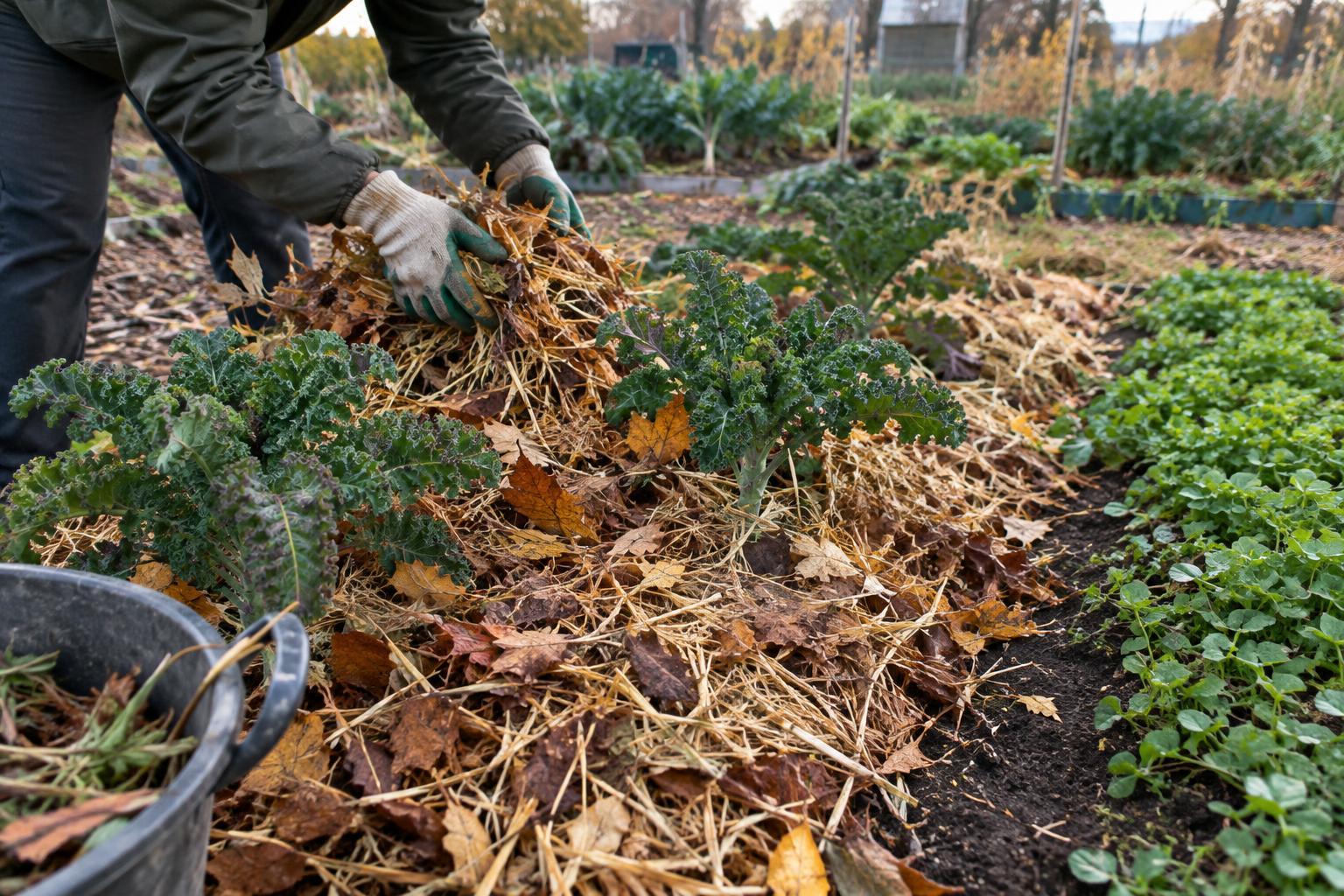
Once paths are safe, notice where water stands and where it has carried soil or mulch. A puddle that drains within a reasonable time may need only observation; repeated standing water near roots or on a path deserves attention. Clear leaves and debris from existing drains and channels without sending runoff into a neighbor’s plot. Rake displaced mulch back into place after the ground has settled, keeping it away from plant crowns and stems.
Avoid digging trenches or turning saturated soil in a rush. That can smear the soil and leave a harder layer when it dries. If a spot repeatedly floods, record its location for a more deliberate fix later, such as adjusting the path surface, redirecting roof runoff, or improving a bed’s layout. For now, keep feet and carts out of muddy areas where possible.
Recheck over the next few days
Storm recovery is not finished when the debris is gone. As plants dry, look for stems that continue to wilt, fruit resting on the ground, and ties that have slipped. Remove badly damaged produce and harvest ripe crops so recovering plants are not carrying unnecessary weight. Wet foliage and crowded growth can favor some plant diseases, but a mark or yellow leaf does not by itself identify a problem. Give plants space and airflow, and observe changes before deciding what else to remove.
For a shared garden, a short task list keeps follow-up manageable: who will check supports, who will clear paths, and which drainage spots need another look after the next rain. Record what held up well, too. Those notes can guide sturdier staking and better water management next season, when there is time to make improvements without the pressure of a storm cleanup.